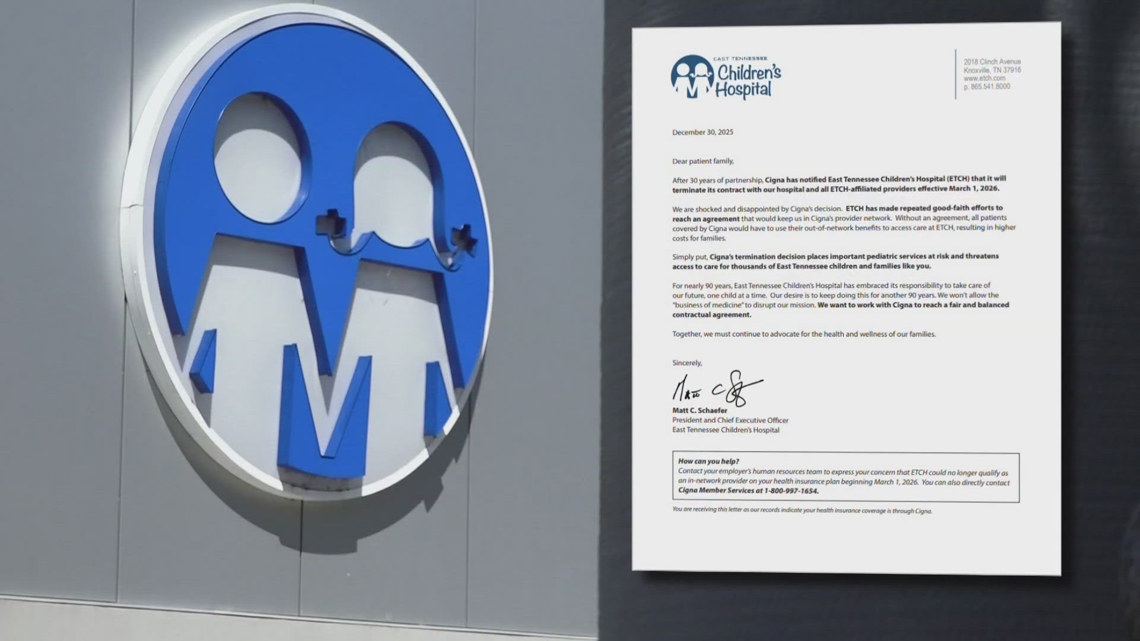

The dispute between Cigna and East Tennessee Children’s Hospital has thrown thousands of families in Knoxville, Tennessee, into a state of uncertainty. The tension stems from Cigna's decision to remove the children’s hospital from its network by March 1, potentially leaving patients without in-network coverage.
According to Cigna, the root cause of the conflict lies in the higher costs associated with receiving treatment at ETCH compared to other local hospitals. The insurance provider claims that the hospital threatened to exit the network unless their demands for increased payments were met. However, a representative from the hospital refuted these claims, asserting that it was Cigna who decided to terminate the agreement unilaterally.
ETCH, as the only children’s hospital in East Tennessee, plays a crucial role in providing specialized services that may not be available elsewhere in the region. The hospital argues that its costs are on par with those of similar children’s hospitals across the country, and that Cigna’s comparison is unfair due to the unique nature of their services in the region.
With approximately 27,000 patients in East Tennessee covered by Cigna, the potential termination of the agreement could have far-reaching consequences for families reliant on ETCH for specialized care. The hospital sent letters to patients with Cigna insurance, warning them of the possibility of being out of network starting March 1. One such family, the Smiths, expressed their anxiety over the situation, as their 2-year-old daughter relies on the hospital for essential medical care.
Despite the mounting tensions, both ETCH and Cigna have expressed a willingness to negotiate and find a resolution that ensures continued coverage for patients. The hospital emphasized its efforts to engage in good-faith discussions, while urging the community to support their cause in preserving the partnership with Cigna. On the other hand, Cigna reaffirmed its commitment to reaching a fair and sustainable agreement before the contract expiration date.
The contested statements from both parties underscore the complexity of the situation, with each side presenting contrasting narratives regarding the termination of the agreement. ETCH maintains that Cigna blindsided them with the termination notice, while Cigna argues that their decision was driven by the hospital’s higher costs compared to other local facilities.
As negotiations continue between ETCH and Cigna, families like the Smiths face uncertainty regarding the future of their children’s healthcare. The looming deadline of March 1 adds urgency to the situation, prompting concerns about the potential impact on patients needing specialized care and the broader community.
Throughout the dispute, the hospital encourages patients to reach out to Cigna to voice their concerns and advocate for the preservation of the partnership. Both parties emphasize the importance of finding a resolution that prioritizes the well-being of patients and ensures continued access to critical healthcare services.
As the deadline approaches, the resolution of the dispute between Cigna and East Tennessee Children’s Hospital remains uncertain, leaving families and the community in Knoxville anxiously waiting for a favorable outcome that safeguards access to essential medical care for children in need.