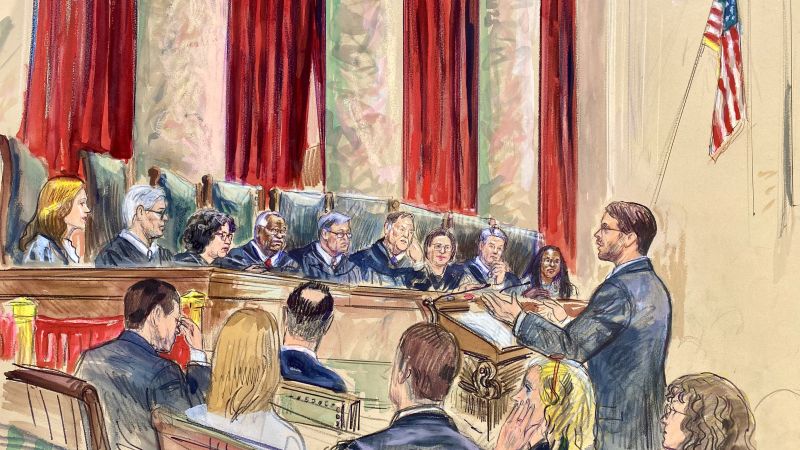

The controversial issue of transgender athlete participation in women's and girls' sports took center stage during a recent Supreme Court session, with a marathon argument that kept all eyes on possible implications for trans rights in broader contexts. Justices Kavanaugh, Roberts, and Gorsuch grappled with various aspects of the debate, weighing considerations of competitive fairness, Title IX prohibitions, and the definition of sex.
Conservative justices seemed inclined to uphold bans on transgender women competing in female sports in Idaho, West Virginia, and other states. Justice Brett Kavanaugh raised concerns about potential disadvantages for cisgender female athletes, emphasizing the importance of competitive fairness. The court's interpretation of Title IX and the broader educational landscape were key areas of contention during the session, with liberal justices pushing for nuanced approaches that accommodate transgender individuals based on their unique circumstances.
President Trump's administration's stance against trans rights cast a shadow over the proceedings, reflecting a broader political and cultural divide on the issue. The challenges to the bans came from two trans athletes, Lindsay Hecox and Becky Pepper-Jackson, whose legal teams argued against definitive decisions that could limit the scope of Title IX's anti-discrimination provisions and the Fourteenth Amendment's equality guarantees in trans cases.
The debate delved into scientific uncertainties regarding hormonal treatments and competitive advantages, with Justice Gorsuch highlighting the complexity of assessing individual capabilities amid evolving medical understandings. The Trump administration and state lawyers urged a binary interpretation of Title IX, defining "sex" strictly in biological terms, a stance that faced opposition from liberal justices wary of potential setbacks in social progress.
The session underscored the high stakes and polarized perspectives surrounding transgender athlete participation in sports, reflecting broader societal tensions around gender identity and inclusion. The legal battle over trans rights in sports continues to raise complex questions about equality, fairness, and the intersection of law, science, and social norms. As the Supreme Court weighs its decision, the implications could resonate far beyond the sports arena, shaping the future of transgender rights in America.
In conclusion, the Supreme Court's deliberations on transgender athlete bans underscore the deep divides and complex legal landscape surrounding gender identity and equality in sports. The ongoing debate signals broader societal tensions and the evolving discourse on trans rights in America, with implications for legal interpretations, political dynamics, and cultural norms. As the court nears a decision, the outcome will have far-reaching consequences, shaping the future of transgender inclusion and fairness in sports and beyond.