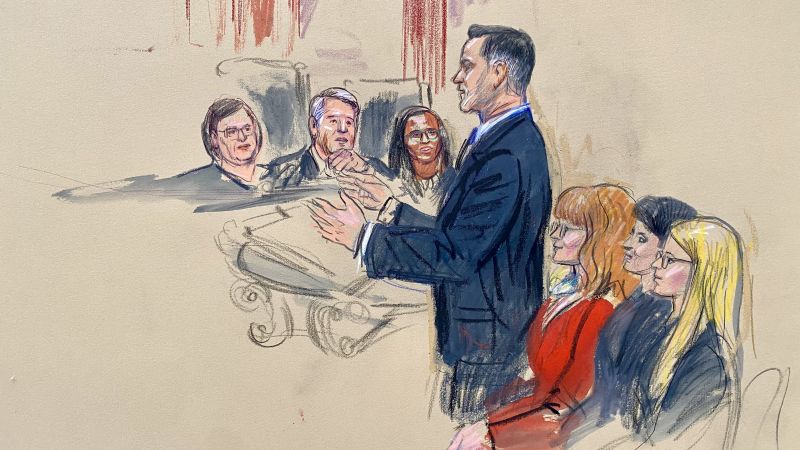
The Supreme Court's recent considerations regarding laws that restrict transgender athletes from participating in women's and girls' sports have sparked significant debate and legal battles. In particular, the cases from Idaho and West Virginia are central to the ongoing discussions surrounding the rights and participation of transgender individuals in sports.
Idaho and West Virginia implemented laws that prevent transgender women and girls from competing on teams corresponding to their gender identity. The overarching question during the Supreme Court's proceedings involved the constitutionality and legality of these state laws. The cases, Little v. Hecox and West Virginia v. B.P.J., have brought to light deep-seated issues related to gender identity, discrimination, and the protection of athletes' rights.
In response to these cases, various arguments were presented, with proponents of the laws asserting that the bans are essential to maintaining fairness and equal opportunities in sports, particularly for cisgender female athletes. On the other side, opponents contended that transgender athletes should not be prohibited from participating based on their gender identity, emphasizing the principles of inclusion and protection from discrimination under Title IX and the 14th Amendment.
Throughout the proceedings, the conservative justices indicated a leaning towards supporting the states' bans, expressing concerns about the potential impact on cisgender female athletes if transgender athletes were allowed to compete alongside them. The discussions delved into complex legal, scientific, and ethical considerations, focusing on issues such as athletic advantages, fairness, and the interpretation of laws safeguarding against discrimination.
Notably, Chief Justice John Roberts and Justice Neil Gorsuch raised points underscoring distinctions between the current sports cases and previous landmark decisions, such as Bostock v. Clayton County, which protected transgender individuals from workplace discrimination. The justices grappled with the intricacies of existing laws, including Title IX, while weighing the nuances of transgender inclusion in sports.
The liberal justices on the court appeared wary of a broad ruling that could have far-reaching consequences and sought to ensure that individual challenges to the bans could still be pursued. Their concerns centered on maintaining the ability for transgender athletes to challenge these laws on a case-by-case basis, rather than facing a blanket endorsement of the bans.
As the legal and moral complexities of the cases continue to unfold, the Supreme Court's eventual ruling will undoubtedly have significant implications for transgender rights, gender equality in sports, and the broader societal understanding of gender identity. The decision is anticipated to be delivered by the end of June, shaping the landscape of transgender sports participation in the years to come.