
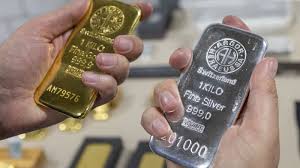
The dramatic plunge in gold and silver prices on Friday sent shockwaves throughout the global financial markets, triggering a widespread sell-off in stocks and funds tied to these precious metals. By early morning, spot silver had dropped by a staggering 15% to settle around $98.66 per ounce, slipping below the significant $100 threshold. Simultaneously, spot gold saw a 7% decline, trading at $5,009.46 per ounce.
The downturn extended to futures exchanges, with front-month gold contracts in New York losing 5.5%, while silver futures for February delivery plummeted by 11%. Notably, platinum and palladium also faced significant declines, with spot platinum down over 14% and palladium falling nearly 12%.
The impact of the sell-off rippled through the wider precious metals market, with key stock indices in Europe reflecting the bearish sentiment. The Stoxx 600 Basic Resources index, comprising the region's major mining companies, was down by 3.2% during morning trading. Shares of London-listed Fresnillo, the world's largest silver producer, tumbled by 7%.
Wall Street also felt the effects of the price drop, as pre-market trading saw silver miner Endeavour Silver down by 14.7% and First Majestic Silver declining by 14.4%. Silver exchange-traded funds cETFsc were not spared either, with the ProShares Ultra Silver fund plummeting by 25% and the iShares Silver Trust ETF losing 12.7% before the opening bell.
The recent downturn comes after a remarkable rally in precious metals over the past year. Both gold and silver had experienced record-breaking surges in 2025, with gold rising by 65% and silver by 150%. In 2026, silver continued its strong performance, gaining 37%, while gold had climbed by 15.4% year-to-date.
Analysts have pointed to various factors influencing the market dynamics. Katy Stoves, an investment manager at Mattioli Woods, highlighted the impact of concentration risk in the market, drawing parallels with the tech sector's dominance. She noted that overcrowding in gold positions could have triggered the sell-off as investors reassessed their portfolios.
Toni Meadows, the head of investment at BRI Wealth Management, echoed concerns about the ease with which gold had breached the $5,000 mark, attributing the rally to central bank buying and uncertainty surrounding U.S. trade policies. Meadows emphasized the potential for further reserve diversification amid geopolitical uncertainties. Similarly, Claudio Wewel, an FX strategist at J. Safra Sarasin Sustainable Asset Management, linked the recent price movements to geopolitical tensions and speculation over the next Federal Reserve chair.
Market participants are closely monitoring the appointment of the next Fed chair, with Former Fed Governor Kevin Warsh leading predictions for the role. The possibility of a more dovish candidate assuming the position has contributed to the volatility in precious metal prices. Speculation surrounding U.S. foreign policy decisions and global macroeconomic conditions continues to shape investor sentiment in the precious metals market.
In conclusion, the sell-off in gold and silver prices reflects a confluence of factors from market overcrowding to geopolitical tensions and central bank policies. The uncertainty surrounding the appointment of the next Fed chair adds another layer of complexity to the evolving dynamics of the precious metals market. Investors are advised to remain vigilant and adapt their strategies to navigate the swiftly changing landscape of the commodity markets.