
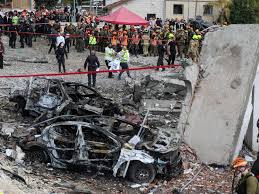
The recent escalation in tensions between the United States and Iran has led to a wave of attacks and counterattacks that have engulfed the region in turmoil. The conflict began with the killing of Iran's Supreme Leader Ayatollah Ali Khamenei, which prompted retaliatory strikes from Iran and its allies. The US has vowed to continue its attacks until all objectives are met, while Iran remains defiant and refuses to negotiate with the US.
Hezbollah, a militant group backed by Iran, joined the conflict by launching missiles and drones at an Israeli army base in revenge for Khamenei's death. This marked the first rocket fire by Hezbollah since a ceasefire agreement in 2024. The attacks have caused disruptions in the region, impacting air travel, oil flow, and the safety of Gulf states.
Amidst the chaos, President Donald Trump outlined a potential timeline for the US conflict with Iran, suggesting that the military campaign could extend for several weeks. Trump's remarks indicated a prolonged engagement in the region, with preparations for multiple weeks of military operations. The President's stance reflects a commitment to seeing the mission through until all objectives are achieved.
The conflict has also drawn in other regional players, with Bahrain condemning Iran's missile strikes and reaffirming its commitment to defending its national security interests. The Gulf Cooperation Council cGCCc held an emergency virtual meeting to discuss the situation and condemned Iran's attacks on member states. The bloc reiterated the need to protect the security and stability of its member nations.
On the international front, the UK has agreed to allow US forces to use its military bases for operations against Iranian missile sites. This decision marked a shift in UK policy and came after Trump criticized the UK for not providing support for potential pre-emptive strikes on Iran. However, the UK clarified that it would not be directly involved in offensive operations against Iran.
As the conflict intensifies, concerns have mounted over potential retaliatory strikes and attacks targeting US facilities and personnel abroad. The threat of suicide attacks and improvised explosive devices adds another layer of complexity to the situation, with US officials increasing security measures to protect against potential threats.
The ongoing conflict has raised tensions globally, impacting financial markets with oil futures surging and stock futures falling sharply. The situation remains fluid, with uncertainty surrounding the duration and outcome of the military operations. Meanwhile, the families of those affected by the conflict, such as the family of Robert Levinson, a former FBI agent who disappeared in Iran, continue to seek justice and accountability.
The evolving situation in the region underscores the complex geopolitical dynamics at play and the far-reaching consequences of military engagements. As the conflict unfolds, the world watches with anticipation, hoping for a swift resolution that brings stability and peace to the region.