
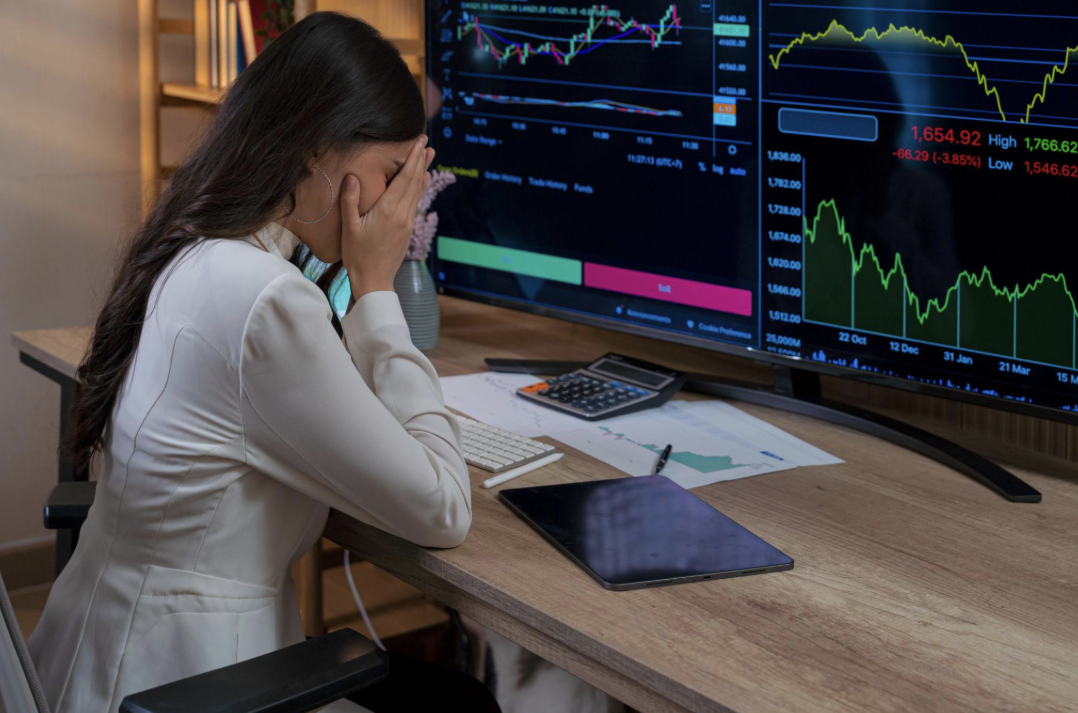
It usually begins as something small.
Checking the market once or twice a day, just to see how things are moving. Maybe looking at a few charts during a break, or reading updates out of curiosity.
At that point, it feels manageable.
But over time, that habit can slowly expand.
Prices change constantly, and each movement starts to feel important. A small rise brings a sense of relief, while a sudden drop can quickly shift the mood of the entire day. What used to be a quick check becomes something that’s revisited again and again.
Without noticing, attention starts to narrow.

Conversations become shorter. Focus drifts more easily. Even during moments that have nothing to do with the market, part of the mind remains elsewhere—thinking about numbers, timing, or what might happen next.
It’s not always about large amounts of money.
Sometimes, it’s simply the constant awareness that keeps the mind occupied. The idea that something important could happen at any moment makes it harder to fully step away.
And because the market never really pauses, the habit doesn’t either.
Late at night, it’s easy to check just one more time. Early in the morning, it becomes the first thing to look at. What started as interest gradually turns into something closer to routine.
That shift is often subtle.

There’s no clear moment where it feels like too much. It just slowly takes up more space—time, attention, and energy—until it begins to affect other parts of daily life.
Simple things can start to feel different.
Meals feel rushed. Rest feels incomplete. Even time away from screens doesn’t fully disconnect the mind from what’s happening.
It’s not that following the market is a problem in itself.

For many people, it’s a meaningful interest or even part of their work. The issue appears when the balance begins to shift—when it stops being something you check, and starts becoming something that constantly pulls your attention back.
Recognizing that shift isn’t always easy.
Because from the outside, nothing dramatic has changed. But internally, the difference becomes noticeable over time.
And once that awareness appears, it often becomes clearer where the line should be drawn.