
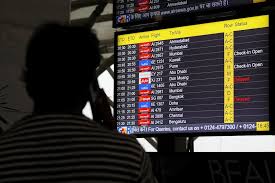
American Airlines announced that all its aircraft impacted by an Airbus recall have now received the necessary software fixes to resume flying. The company confirmed that no planes were left to be updated out of the 209 affected. This update comes amidst a significant disruption caused by Airbus ordering immediate software fixes for 6,000 A320-series aircraft, affecting over half of the narrow-body fleet and leading airlines to ground jets during the Thanksgiving travel rush.
The ripple effect of this directive extended globally, impacting thousands of travelers worldwide. The incident, linked to solar flares, particularly affected Asia, where the A320 family is crucial for short-haul networks. United Airlines confirmed that six aircraft in its fleet were affected, anticipating only minimal disruptions to a few flights. Delta Air Lines reported that less than 50 of its Airbus A320 fleet were impacted by the recall.
In Japan, ANA Holdings canceled 95 domestic flights, affecting around 13,200 passengers. Air India, partially owned by Singapore Airlines, has completed software updates on over 40% of its affected aircraft, averting flight cancellations but leading to some delays and rescheduling. Similarly, Scoot, part of the Singapore Airlines group, aimed to complete fixes on 21 out of its 29 A320s by Saturday.
Jetstar Airways in Australia had to cancel around 90 flights after identifying 34 aircraft requiring the software correction. However, by late afternoon, 20 of the affected planes were ready to return to service, with the remainder expected to be operational by Sunday. Jetstar and its parent company, Qantas, hold a dominant position in the Australian domestic market, with Virgin Australia remaining unaffected by the recall as it operates a different aircraft fleet.
The European Union Aviation Safety Agency issued a directive concerning an incident on a JetBlue flight on October 30, prompting the U.S. Federal Aviation Administration to order the necessary actions. Airbus CEO Guillaume Faury acknowledged the logistical challenges and delays the fix imposed, emphasizing their commitment to supporting operators in swiftly deploying updates to ensure normal flight operations resume promptly.
Transportation Secretary Sean Duffy confirmed close collaboration with Airbus and the FAA to assist airlines in completing emergency software repairs. He assured the public that only a small percentage of aircraft in the U.S. needed immediate updates, and travelers should not be greatly impacted. Airlines are racing against time to comply with the deadline set for the completion of these crucial updates.
American Airlines indicated that roughly 340 of its 480 A320-family jets would need the software update, with the majority expected to be completed by Saturday. Delta Air Lines mentioned that fewer than 50 of its A321neo planes required updates, with all expected to be done by Saturday morning. United Airlines noted that six of its aircraft were impacted, foreseeing only minor disruptions to a few flights.
The recall stirred action among other major carriers globally, including Lufthansa, IndiGo, and easyJet, who also decided to temporarily ground affected aircraft for necessary repairs. Colombian carrier Avianca had to halt ticket sales for travel through early December due to more than 70% of its fleet being impacted by the Airbus recall.
Despite the challenges posed by this unexpected directive, airlines are working diligently to ensure passenger safety and minimal disruption to flight schedules. With the completion of the required software updates, affected aircraft are gradually returning to service, allowing airlines to resume normal operations and cater to the influx of holiday travelers.