The United States Navy boasts some of the most sophisticated aircraft carriers globally, strategically positioned across the world to project military power effectively. With a staggering fleet of 11 carriers, the U.S. Navy demonstrates its formidable presence on the seas at any given time, capable of swiftly adapting its locations based on mission requirements. Among these carriers is the USS Abraham Lincoln, a nuclear-powered Nimitz-class vessel that made a scheduled port visit to Guam in December 2025 as part of routine operations within the U.S. 7th Fleet area of responsibility, covering 36 countries and half of the world's population.
Accompanied by a group of modernized Arleigh Burke-class guided-missile destroyers, the USS Abraham Lincoln carried its full complement of mission-ready aircraft in its air wing. During the port visit, the crew engaged in crucial maintenance tasks and resupply operations to ensure peak operational readiness for upcoming missions. This maintenance work was pivotal in guaranteeing that the carrier, its equipment, and personnel remained well-prepared and fully functional for any future operational requirements.
In the lead up to its Guam visit, the USS Abraham Lincoln had been deployed in the U.S. 5th and 7th Fleet regions in 2024 before returning to San Diego later that year. Additionally, the carrier participated in the Northern Edge exercise in Alaska in late summer 2025. This exercise was a significant joint operation involving the U.S. Navy and other military branches, focusing on enhancing the integration of air, sea, and missile defense capabilities.
During its stopover in Guam, the USS Abraham Lincoln, one of the oldest active aircraft carriers, embarked on a four-day port call, allowing approximately 20 sailors and Marines to reunite with their families in a heartwarming homecoming ceremony. Besides fostering family connections, the crew engaged in community outreach activities and volunteer initiatives during their stay. This port call also offered a well-deserved break for the sailors after intensive weeks at sea conducting flight operations.
Guam's strategic importance as a regular port of call for U.S. military forces can be attributed to its strategic geographical location in the Pacific Ocean, situated about 4,000 miles west of Hawaii and closer to East Asia than the U.S. mainland. Furthermore, Guam's status as a U.S. territory facilitates the organization and execution of military operations without requiring additional approvals from host nations, streamlining logistical processes for the U.S. military.
However, Guam's role as a crucial military hub faces challenges related to energy security, as various threats, including natural disasters, physical attacks, and cyber intrusions, pose risks to the stability of military operations on the island. To mitigate these risks and ensure continuous support for military forces in the Pacific, efforts are underway to bolster Guam's energy infrastructure, safeguarding the readiness of military assets and operations vital to regional security.
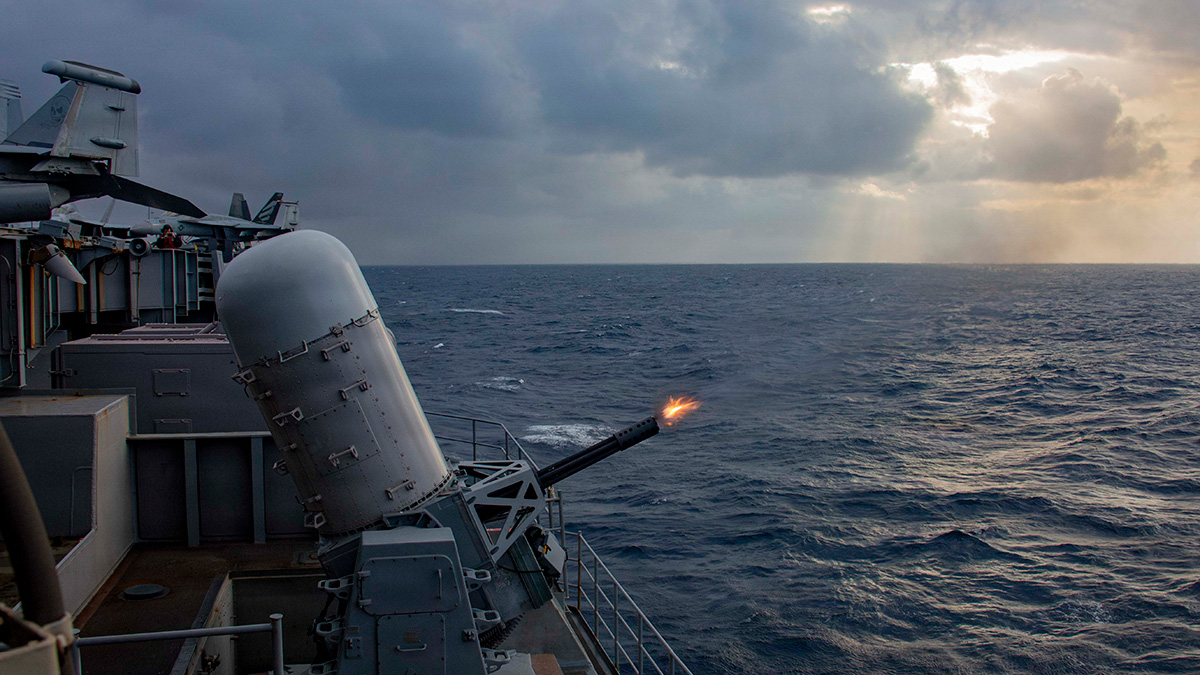
In recent naval exercises, the USS Abraham Lincoln showcased its capabilities, including the firing of its Close-In Weapon System during drills conducted alongside the Abraham Lincoln Carrier Strike Group in the U.S. 7th Fleet area of responsibility. These exercises are designed to deter aggression, strengthen regional alliances, and maintain peace through strategic maritime presence. Operating alongside destroyers USS Frank E. Petersen Jr., USS Spruance, and USS Michael Murphy, the carrier strike group, including Carrier Air Wing 3, has maintained an active presence in the Philippine Sea, contributing to regional security objectives.
Commissioned in 1989, the USS Abraham Lincoln is a Nimitz-class aircraft carrier capable of accommodating approximately 90 fixed-wing aircraft and helicopters. Equipped with advanced defensive systems, including the Phalanx CIWS, Rolling Airframe Missile, and Sea Sparrow, the vessel is well-protected against airborne and missile threats, underscoring its critical role in U.S. naval power projection capabilities.
In contrast to the U.S. Navy's robust carrier capabilities, discussions and comparisons arise concerning the armament and capabilities of carriers from other nations, such as the British Royal Navy. Dialogue among experts often delves into the nuances of carrier design, armament choices, funding constraints, and technological features, highlighting the complexities involved in modern carrier operations and strategic planning within different naval contexts.
As military forces continue to navigate evolving threats and geopolitical challenges within the maritime domain, ongoing efforts to enhance operational readiness, strengthen alliances, and uphold peace through deterrence remain paramount objectives for naval powers worldwide. The dynamic nature of carrier operations underscores the need for continuous innovation, collaboration, and adaptive strategies to safeguard maritime security and stability in an ever-changing global security environment.