
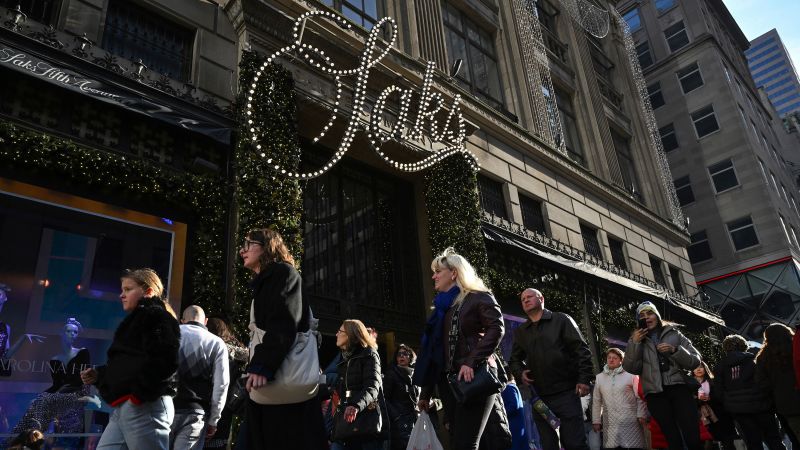
Saks Global, the parent company of the renowned luxury retailer Saks Fifth Avenue, made headlines as it filed for Chapter 11 bankruptcy protection in the US Bankruptcy Court for the Southern District of Texas. This move came as a consequence of the company grappling with a significant debt burden following its acquisition of rival Neiman Marcus back in 2024.
The dynamics within the luxury retail sector have been shifting, reflecting the changing habits of American consumers. Many shoppers have become disenchanted with traditional luxury retailers, citing high price points juxtaposed with perceived diminishing quality. In response, a growing number of luxury consumers now tend to favor direct-to-consumer purchases from brands themselves, bypassing intermediaries like department stores.
The economic climate in recent times has added another layer of complexity to the retail landscape. Consumer sentiment has been on a downward trajectory, exacerbated by a tightening job market, heightened financial anxiety, and an overall sense of economic uncertainty. A recent CNN poll indicated that a majority of Americans attribute the challenges in the economy to decisions made by the current administration.
Notably, the announcement of Saks Global's bankruptcy proceedings coincided with key leadership changes. Marc Metrick, the former CEO, passed the baton to Richard Baker, the company's executive chairman. However, Baker's tenure as CEO was short-lived as he soon stepped down from the position. Following the filing, Geoffroy van Raemdonck, the former chief of Neiman Marcus, assumed the role of CEO during the bankruptcy proceedings.
The bankruptcy filing marked a pivotal moment for Saks Global, signaling a transformative phase for the company. Van Raemdonck expressed optimism about the future, emphasizing a strong commitment to enhancing the company's foundation and navigating the challenges ahead. The strategic vision includes aligning with newly appointed leadership to drive the company's evolution, maintain a customer-centric approach, and continue shaping the luxury retail landscape.
Saks Global's journey to the bankruptcy court was seeded in the 2024 merger between Saks owner HBC and Neiman Marcus, with the aim of consolidating power to negotiate better terms with brands and reinvigorate in-store foot traffic. However, internal financial strains led to challenges in honoring vendor payments, further straining relationships and setting the stage for the eventual bankruptcy protection filing.
In response to the bankruptcy, Saks Global secured $1 billion in debtor-in-possession financing to support its operational needs and restructuring initiatives. Additionally, a bondholder group committed to providing an additional $500 million in financing post-bankruptcy emergence. These financial arrangements aim to bolster the company's liquidity and pave the way for a successful turnaround.
The unfolding saga of Saks Global's bankruptcy underscores the intricacies of the retail landscape, the evolving consumer preferences, and the resilience required for companies to adapt to changing market conditions. As the luxury retailer charts a path towards transformation, the industry spectates on how this iconic brand will navigate the challenges and emerge stronger on the other side.