
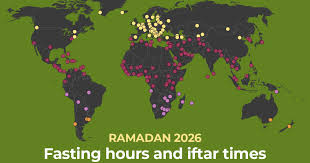
Ramadan, the holy month in the Islamic calendar, is just around the corner, and Muslims around the globe are gearing up to observe this significant period of fasting, reflection, and spiritual growth. The timing of Ramadan is determined by the sighting of the crescent moon, heralding the beginning of a month-long fast that stretches from dawn to dusk. The duration of the fast varies depending on one's location, ranging from approximately 11.5 to 15.5 hours, with the specific hours evolving as the month progresses.
This year, Saudi Arabia announced that the first day of fasting would commence on Wednesday, February 18, following the sighting of the crescent by the moon-sighting committee. Throughout the month, Muslims adhering to the fast will abstain from consuming food and drink during daylight hours as a testament to their faith and to cultivate a heightened awareness of God, known as "taqwa."
Ramadan holds profound significance for Muslims worldwide, as it is believed to be the month when the first verses of the Quran were revealed to the Prophet Muhammad over 1,400 years ago. The fast serves as a spiritual practice, requiring participants to refrain not only from eating and drinking but also from smoking and engaging in sexual relations during the daylight hours.
The Islamic calendar, based on the lunar Hijri calendar, includes months that are either 29 or 30 days long. As a result, Ramadan shifts earlier by 10 to 12 days each year, presenting a unique experience annually. The variation in the length of fasting hours is influenced by geographic location, with individuals in the Northern Hemisphere experiencing shorter fasts this year, gradually diminishing until 2031 when Ramadan coincides with the winter solstice, marking the shortest day of the year. Conversely, those residing south of the equator will endure longer fasting hours.
Given the global diversity of fasting experiences, individuals residing in countries like Chile, New Zealand, and South Africa can anticipate initial fasting durations of approximately 14 to 15 hours on the first day of Ramadan, gradually decreasing as the month progresses. The dynamics of daylight hours across different regions contribute to the unique rhythms of fasting observed by Muslims worldwide.
As Muslims embark on the spiritual journey of Ramadan, various cultural practices and traditions enrich the experience. Greetings such as "Ramadan Mubarak" and "Ramadan Kareem" are exchanged among Muslim communities, conveying wishes for a blessed and generous month. The communal spirit of Ramadan extends beyond faith boundaries, welcoming non-Muslims to engage in activities and share in the sense of unity and devotion that permeates the month.
The observance of Ramadan involves not only the physical act of fasting but also a deepened focus on spiritual growth and self-improvement. Participants engage in acts of charity, prayer, and reflection, seeking to strengthen their connection with God and cultivate mindfulness and gratitude. The daily rituals of suhoor cpre-dawn mealc and iftar cmeal to break the fast at sunsetc punctuate the fasting day, uniting families and communities in moments of shared worship and fellowship.
Throughout Ramadan, Muslims strive to embody virtues of patience, compassion, and generosity, embodying the core values of their faith. The observance of Ramadan culminates in the joyous celebration of Eid al-Fitr, marking the end of the fasting period with communal prayers, festive gatherings, and acts of charity.
As Muslims prepare to embark on this annual spiritual journey, the essence of Ramadan lies not only in the physical act of fasting but in the opportunity for personal growth, reflection, and communal unity that defines this sacred month. May this Ramadan be a time of blessings, renewal, and spiritual enrichment for all those partaking in this revered tradition.